 For Client Support:


 Blog Details
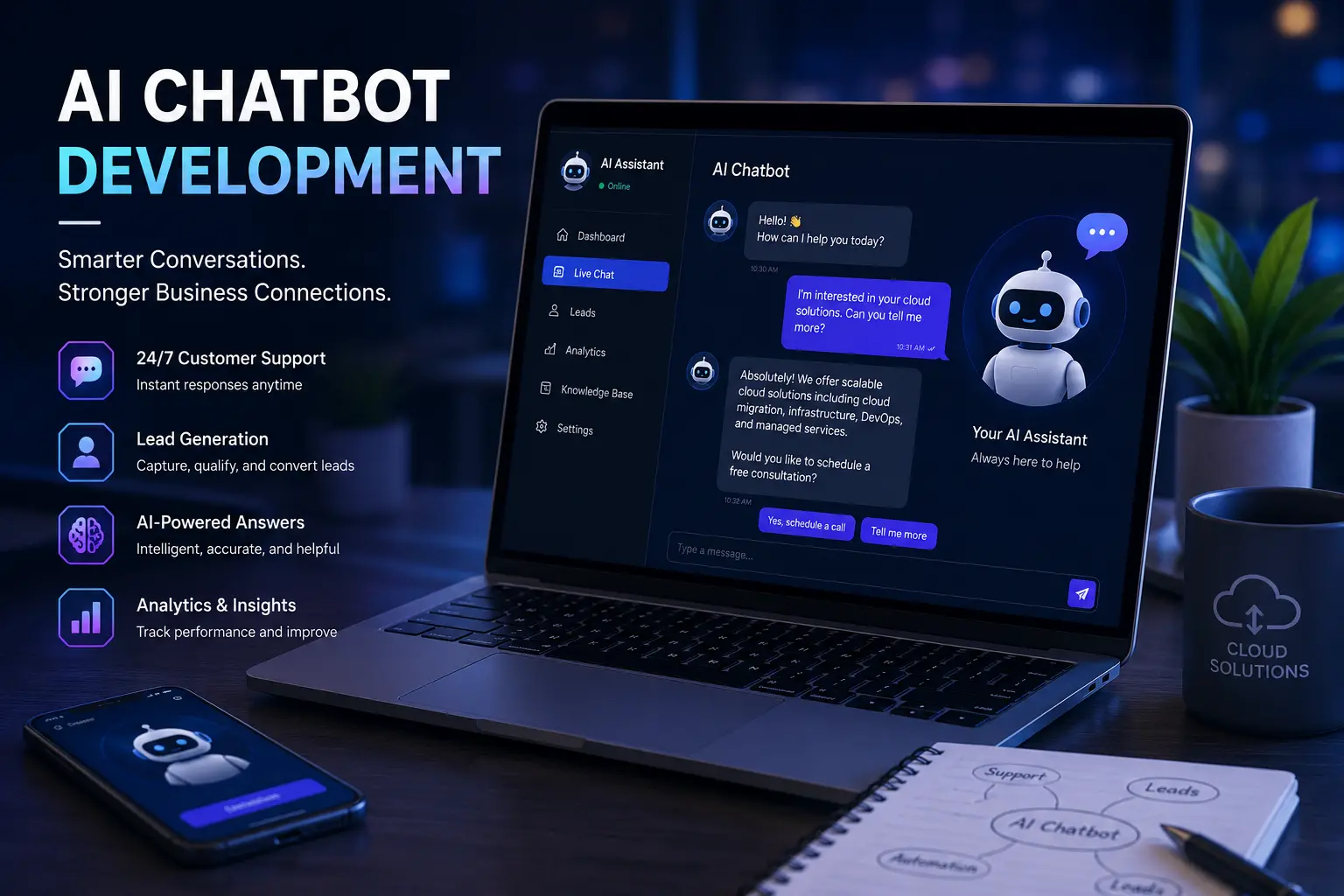

Businesses evaluating rag chatbots explained need practical guidance that accounts for security, cost, maintainability, and customer experience. This guide from Cloud Technology Computing explains the decisions and implementation checks that matter most.
What Is Retrieval-Augmented Generation?
Retrieval-augmented generation, or RAG, retrieves relevant information from a trusted knowledge source before an AI model generates an answer. For a business website, sources can include service descriptions, FAQs, product information, policies, and approved blog articles.
How a RAG Workflow Works
A visitor submits a question. The backend searches indexed documents or database records, selects relevant passages, and sends those passages to a language model along with instructions. The application then returns a response and, when possible, links to its source.
Using PHP and MySQL
A PHP application can query MySQL or MariaDB tables using prepared statements and send retrieved context to an AI API from the server. Start with well-structured keyword retrieval; add semantic search or embeddings when the use case justifies additional infrastructure.
Keep Customer Data Safe
Protect API keys in server-side configuration. Limit retrieval to approved content, validate user input, avoid sending unnecessary personal information to the model, and implement rate limiting. Treat database text as untrusted content rather than as instructions.
Lead Capture and Human Handoff
A chatbot may guide visitors toward a contact form or consultation request, but collecting contact information should be transparent and consent-aware. Provide a human support path for uncertain answers, sensitive requests, and high-impact decisions.
Measure Answer Quality
Build a test set of common customer questions. Track answer relevance, unsupported claims, source coverage, latency, and failed retrievals. Review responses regularly as business information changes.
Next Steps
Document your current systems, prioritize the highest-impact improvements, and test changes before production deployment. For help planning cloud infrastructure, custom software, or website optimization, contact Cloud Technology Computing.
0 Comments