 For Client Support:


 Blog Details
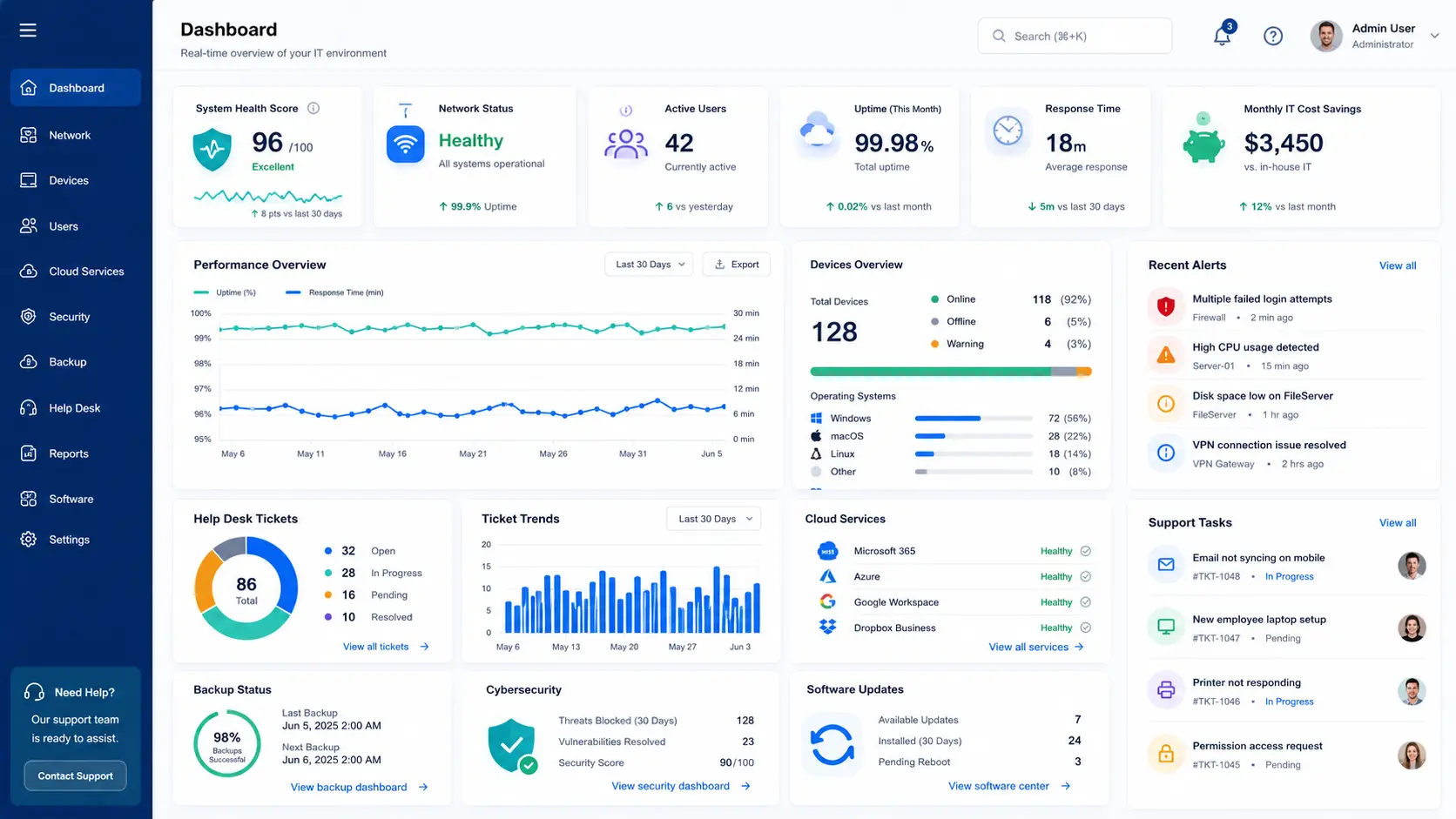

Businesses evaluating managed it services for small business need practical guidance that accounts for security, cost, maintainability, and customer experience. This guide from Cloud Technology Computing explains the decisions and implementation checks that matter most.
What Are Managed IT Services?
Managed IT services are ongoing technology operations and support delivered under an agreed scope. They can cover devices, user accounts, websites, cloud servers, monitoring, backups, security updates, and help desk support.
Define the Service Scope
Before signing an agreement, identify supported systems, response windows, escalation contacts, exclusions, and whether after-hours support is available. A clear service-level agreement prevents confusion.
Cloud Monitoring and Maintenance
Typical tasks may include uptime monitoring, patch scheduling, certificate renewal, capacity checks, backup verification, and reviewing infrastructure costs. Some services require additional licensing or separate project work.
Security and Access Management
Ask how the provider handles privileged accounts, multi-factor authentication, incident response, audit logs, and employee onboarding or offboarding. Clarify who owns credentials and business data.
What to Ask a Provider
Request a written inventory, onboarding plan, support channels, reporting cadence, and recovery expectations. Compare proposals by coverage and accountability rather than monthly price alone.
When to Use Project-Based Consulting
A one-time website migration or application build may be better handled as a defined project. Ongoing managed support makes more sense when systems need continuous attention.
Next Steps
Document your current systems, prioritize the highest-impact improvements, and test changes before production deployment. For help planning cloud infrastructure, custom software, or website optimization, contact Cloud Technology Computing.

0 Comments