 For Client Support:


 Blog Details
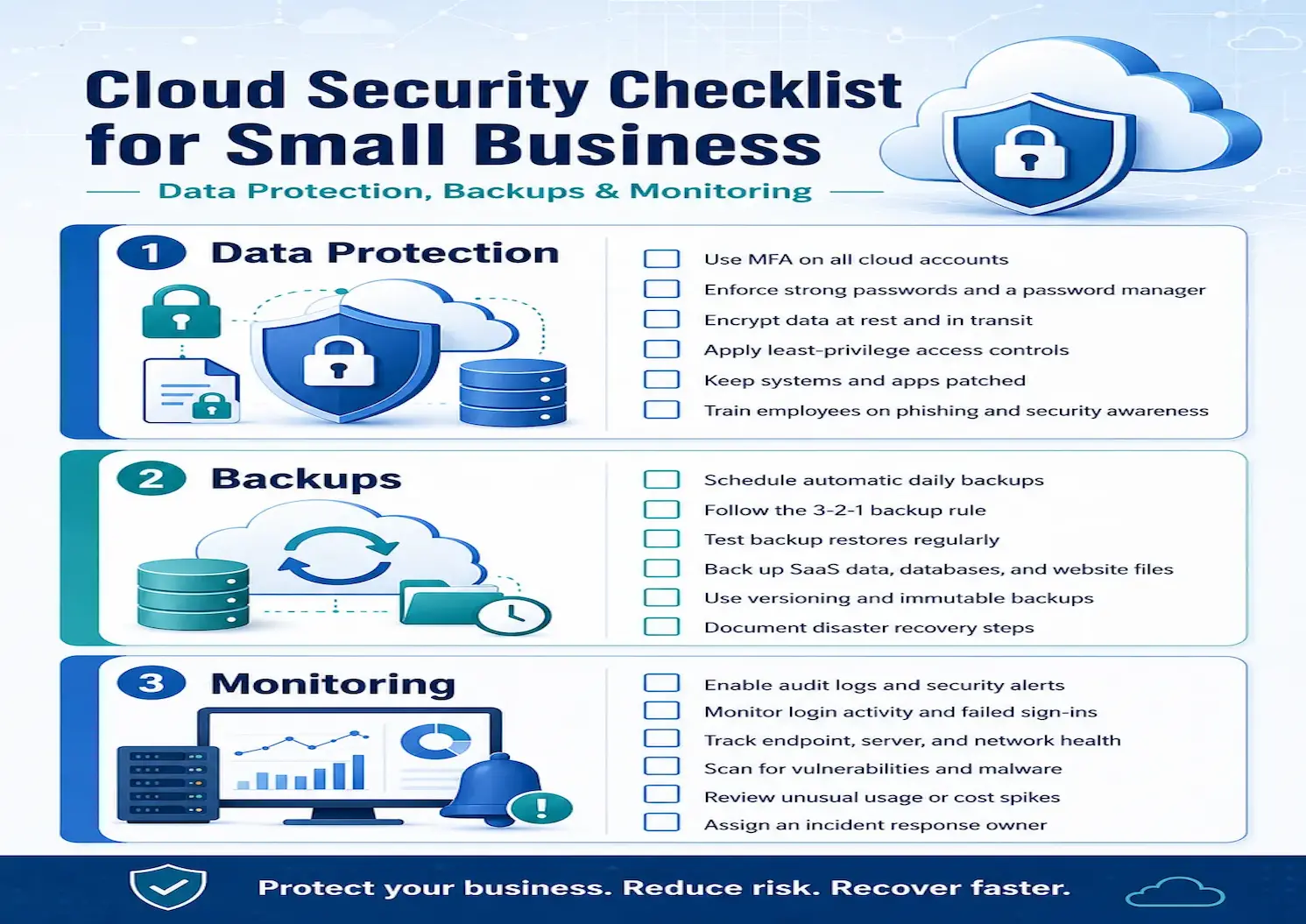

Businesses evaluating cloud security checklist for small businesses need practical guidance that accounts for security, cost, maintainability, and customer experience. This guide from Cloud Technology Computing explains the decisions and implementation checks that matter most.
Start With Identity and Access
Enable multi-factor authentication, use individual administrator accounts, remove unused permissions, and apply least privilege. Review access after employee or contractor changes.
Protect Data in Transit and at Rest
Use HTTPS for public applications and encrypt sensitive storage where appropriate. Document where customer information is stored, how long it is retained, and who can access it.
Patch and Harden Systems
Keep the operating system, PHP runtime, database, libraries, and web server updated. Disable unnecessary services and restrict SSH and database access to trusted sources.
Back Up and Restore
Automate backups with appropriate retention, protect backup credentials, and periodically perform recovery tests. Consider separate storage or accounts for resilience against accidental deletion or compromise.
Monitor and Respond
Centralize logs, configure alerts for unusual activity, and establish a basic incident-response plan. Security controls need ongoing maintenance, not just one-time setup.
Understand Shared Responsibility
Cloud providers secure their underlying infrastructure, while customers remain responsible for many configuration, identity, application, and data-protection decisions. The exact split depends on the service model.
Next Steps
Document your current systems, prioritize the highest-impact improvements, and test changes before production deployment. For help planning cloud infrastructure, custom software, or website optimization, contact Cloud Technology Computing.

0 Comments