Houston, Texas, United States

Cloud Hosting vs. Dedicated Hosting: A Case Study by Cloud Technology Computing Corporation

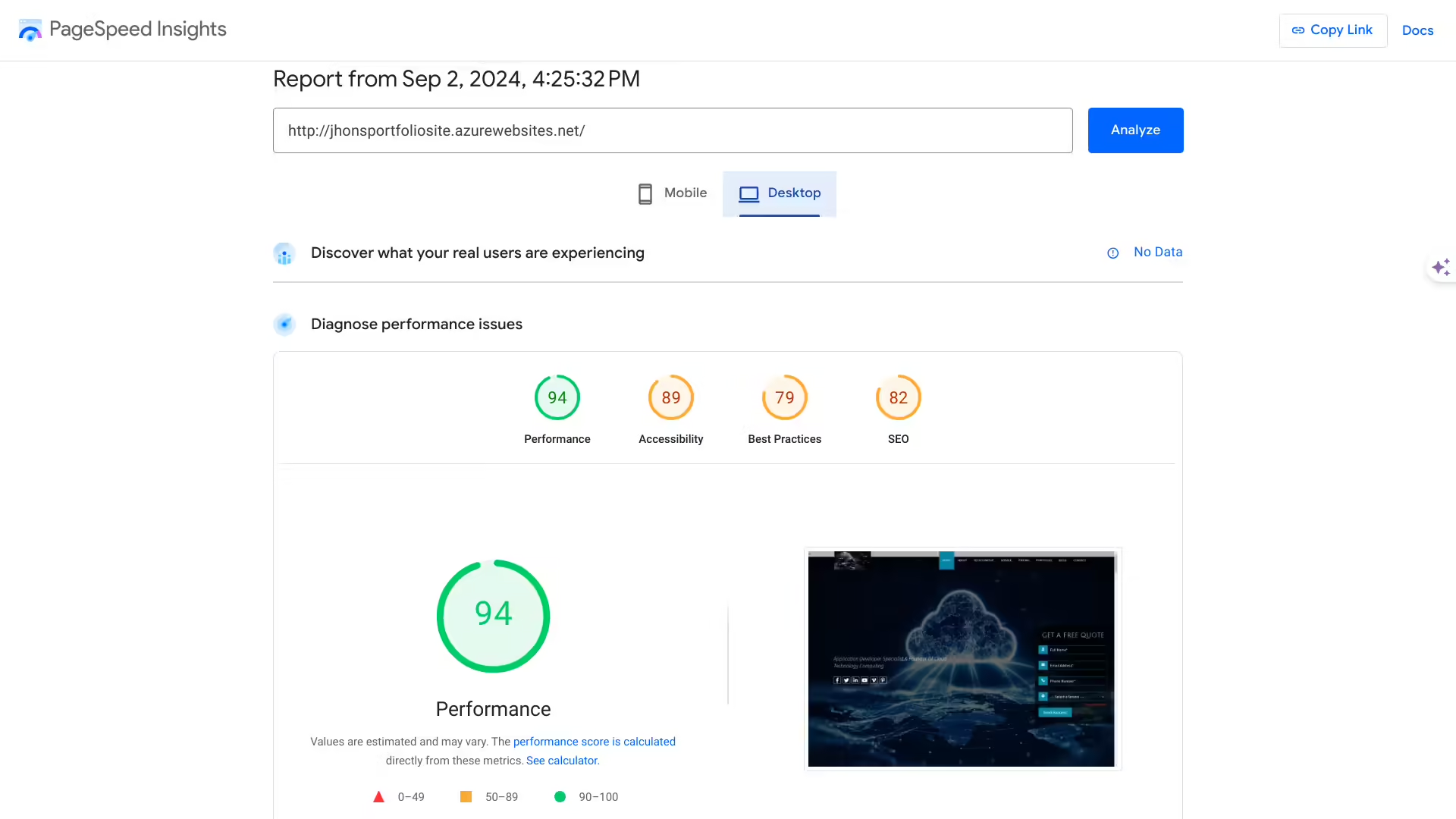
Azure cloud hosting desktop performance test

Cloud Technology Computing Corporation conducted a comprehensive evaluation to determine the most suitable hosting environment for their web applications. The study focused on comparing the performance, reliability, scalability, and cost-effectiveness of cloud hosting solutions, specifically AWS and Azure, against their existing dedicated hosting providers, Hostinger and Eco Web Hosting. The goal was to identify the best platform to support their operations before making a full transition to cloud hosting.

Performance Testing

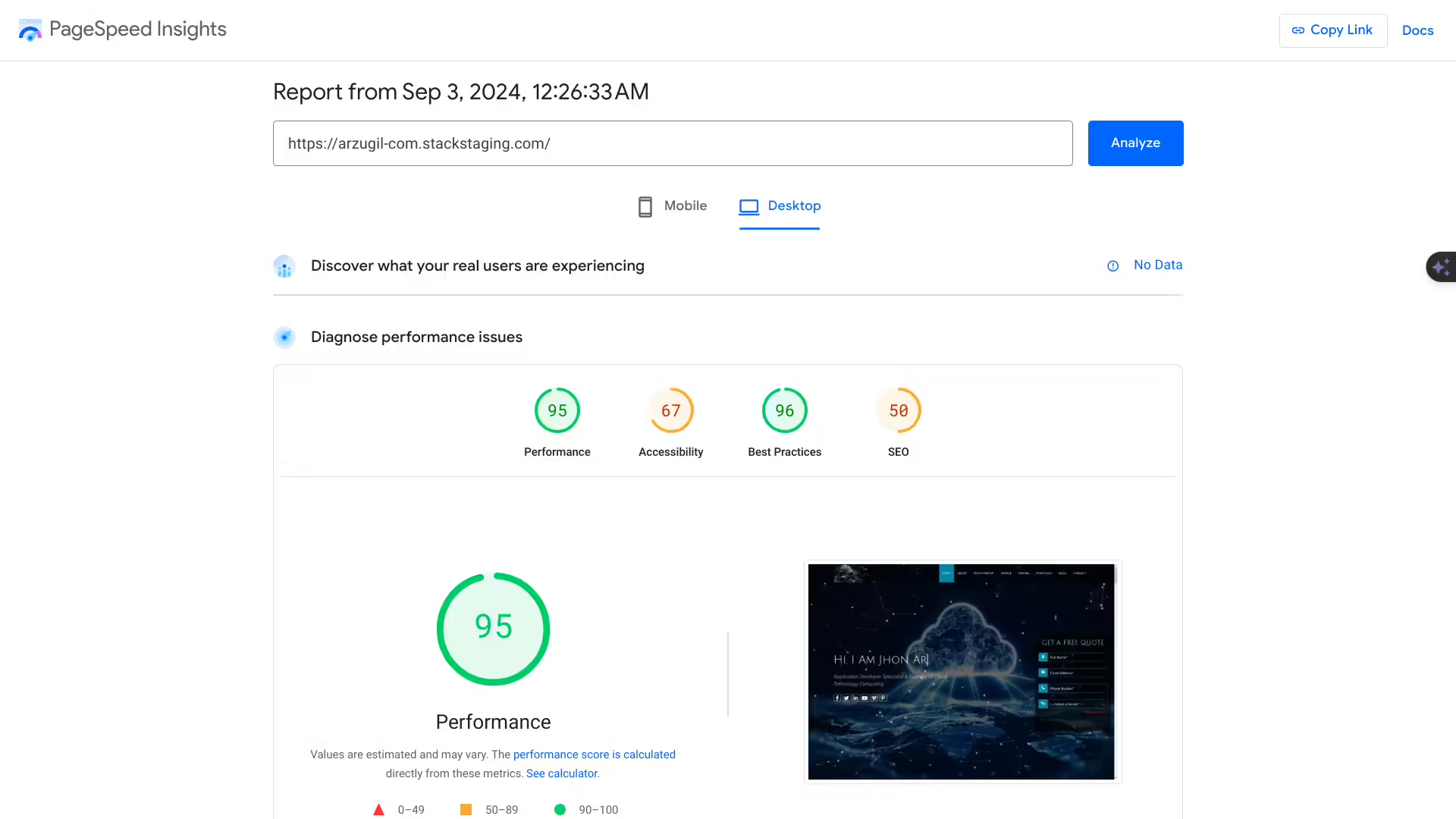
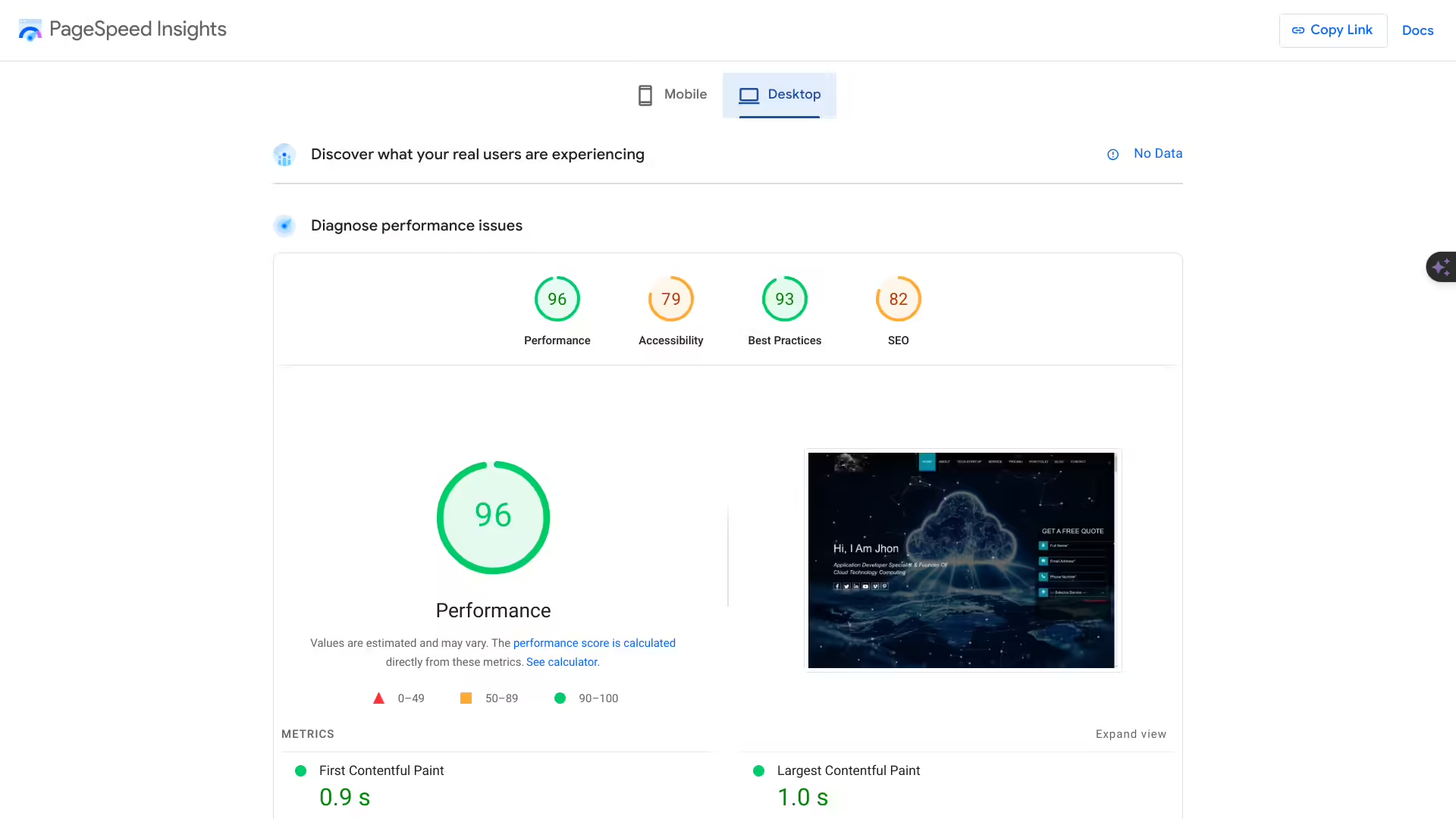
The evaluation focused on key performance indicators, including load times, server response times, and scalability under traffic surges across AWS, Azure, Hostinger, and Eco Web Hosting.

Findings: AWS demonstrated significant improvements in load times due to globally distributed data centers. Azure showed similar performance, with slight differences depending on regional data centers. Hostinger remained stable, but load times were longer compared to both cloud environments, especially during peak traffic periods.

PageSpeed Insights test for Eco Web Hosting
PageSpeed Insights test for Hostinger

Scalability

AWS and Azure both offered superior scalability, handling traffic surges without major performance degradation. Autoscaling features in AWS and Azure allowed for automatic resource adjustment based on demand.

Hostinger provided a stable hosting environment, but scalability required more manual server adjustments and could lead to temporary slowdowns during high-traffic periods.

Process Load Times

AWS demonstrated significant improvements in load times, benefiting from globally distributed data centers that reduced latency and provided faster access to content.

Azure showed similar performance to AWS, with slight differences based on regional data center proximity. Dedicated hosting providers like Hostinger provided stable load times, but they were generally slower compared to cloud environments during peak traffic periods.

Research
Step 01

Research

Understand the problem, gather requirements, and analyze potential hosting and cloud solutions.

Development
Step 02

Development

Build and implement the solution based on the research findings and technical requirements.

Testing
Step 03

Testing

Validate that the solution meets performance, reliability, scalability, and usability requirements.

Deploy
Step 04

Deploy

Launch the solution to the production environment and ensure it remains stable and operational.

Mission

The company mission is to provide cutting-edge technology solutions that help businesses thrive in the digital age. By focusing on innovation, client satisfaction, and technological excellence, Cloud Technology Computing Corporation aims to be a leader in cloud computing, software development, AI automation, and digital transformation.

SAP Analytics Cloud dashboard case study image
Website optimization and cloud performance case study image

Chatbot

Hey there 👋
How can I help you today?